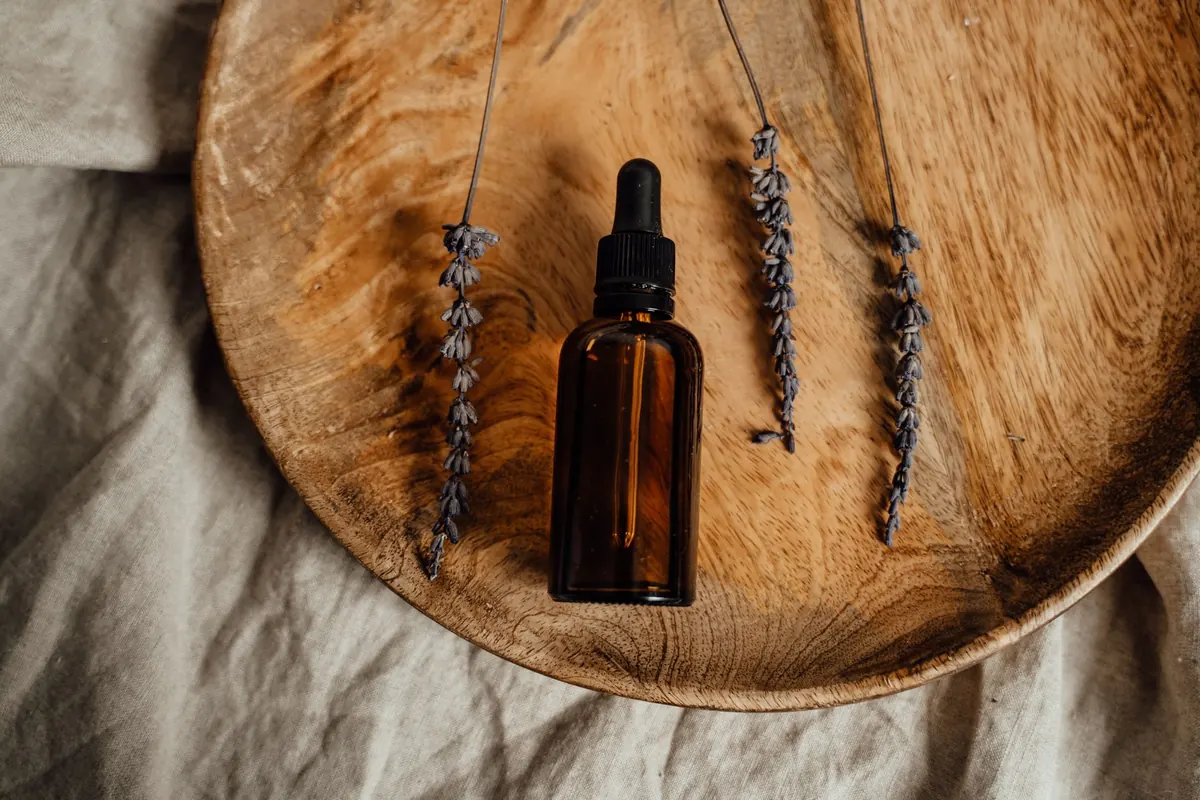
The bottle of lavender oil on your nightstand isn't medicine. It's something quieter: a cue. Smell is the one sense wired almost directly into the parts of the brain that handle memory and emotion, which is why a familiar scent can loosen your shoulders before you've decided it should. Aromatherapy borrows that shortcut. Used thoughtfully, it's a cheap, pleasant addition to a stress-relief routine. Used carelessly, it can irritate skin, trigger headaches, or waste money on oils you'll never use. Here's what the evidence actually supports, and how to dilute, diffuse, and apply essential oils without guessing.
What the Science Says, and What It Doesn't
Essential oil research is uneven. Many studies are small, short, and rely on participants rating their own anxiety or sleep — which means expectations matter a lot. Lavender is the most studied oil, and trials generally point toward modest improvements in self-reported calm and sleep quality, with results that are real but rarely dramatic. Citrus oils show up in mood studies too, again with modest effects.
Two honest caveats. First, the smell itself is doing a lot of the work: if you associate a scent with safety or rest, your body may respond to the association as much as the chemistry. Second, many topical studies blend massage with the oil, so it's hard to separate the touch from the scent.
None of this treats an anxiety disorder, panic attacks, or depression. If stress is disrupting your sleep, appetite, or work for weeks at a stretch, that's a conversation with a doctor or therapist — a diffuser isn't the answer.
Oils Worth Trying for Stress
You don't need a shelf of thirty bottles. A handful covers most situations:
- Lavender — floral and familiar; the safest first choice for evening blends.
- Sweet orange or bergamot — brighter, more uplifting; good for an afternoon slump. Bergamot is phototoxic, so keep it off skin you'll expose to sun.
- Roman chamomile — apple-sweet and sedative-leaning; excellent at bedtime, though often the priciest bottle here.
- Clary sage — earthy and warm; commonly blended for tension. Skip it during pregnancy.
- Frankincense — resinous and steadying; pairs well with citrus for a grounding blend.
- Peppermint — not calming so much as clarifying; strong, and best kept away from children's faces.
Buy from brands that list the plant's botanical name and a batch number. Store bottles in a cool, dark place, and replace citrus oils after about a year, when they start to smell like furniture polish.
Diffusing or Topical: Pick the Right Tool
Diffusing scents a whole room, requires no skin contact, and is the easiest way to shift the mood of a space. Run it for 30 to 60 minutes rather than all day, and crack a window if the room is small. Three to five drops in 100 mL of water is plenty; more doesn't work better.
Topical use is more personal and longer-lasting. A diluted blend rubbed into wrists, temples, or a tight neck travels with you, which is why it suits a commute or a difficult meeting. If you want something discreet for a desk, put a few drops on a cotton ball inside a sealed jar and open it when you need it.
Safe Dilution Without the Math Headache
Essential oils are concentrated plant extracts, not perfume. One drop is roughly 0.05 mL, and there are about 20 drops in a milliliter. Working from that, one tablespoon of carrier oil (15 mL) holds roughly 300 drops — so a 1% blend is about 3 drops. Here's the practical version:
- 1% — 3 drops per tablespoon. Daily use, larger areas, sensitive or mature skin.
- 2% — 6 drops per tablespoon. Short-term use on small areas like wrists or shoulders.
- 3% — 9 drops per tablespoon. Occasional, small areas only. If you're unsure, stay lower.
Good carriers include jojoba, sweet almond, grapeseed, and fractionated coconut oil. Patch test any new blend on your inner forearm and wait 24 hours before using it more widely. Never apply undiluted oil to skin.
A Weeknight Routine You Can Keep
- Thirty minutes before bed, add 3 drops lavender and 1 drop sweet orange to your diffuser and set a 45-minute timer.
- While it runs, roll a 1% blend onto your wrists and the back of your neck.
- Breathe deliberately: inhale for four counts, exhale for six, five times. The oil is the cue; the breathing does the heavier lifting.
- Note one line on your phone — how you felt before, how you feel now. Two weeks of notes will tell you more than any article can.
Safety Notes Worth Reading Twice
- Don't swallow essential oils unless a qualified practitioner has told you to. Some are toxic in small amounts.
- Keep them out of eyes, ears, and other mucous membranes, and wash your hands after handling.
- Avoid peppermint, eucalyptus, camphor, and tea tree around infants and young children.
- Cats metabolize these compounds poorly; many oils are toxic to them. Diffuse where a pet can leave, or skip it.
- If you're pregnant, asthmatic, or taking medication for blood pressure or epilepsy, check with a clinician first.
- Rash, headache, or nausea means stop, ventilate, and rinse.
Making It Work for You
Keep two or three oils you genuinely enjoy and use them at the same times each day, attached to habits you already have — closing the laptop, brushing your teeth, settling into bed. Consistency turns a scent into a signal, and a signal is what actually helps on a hard day. If you dislike lavender, no study will change that; pick something you'd happily smell again tomorrow.
Aromatherapy sits alongside the fundamentals, not in place of them: sleep, movement, daylight, people who listen, and professional support when stress stops being manageable on your own.
Photo: Alesia Kozik / Pexels